
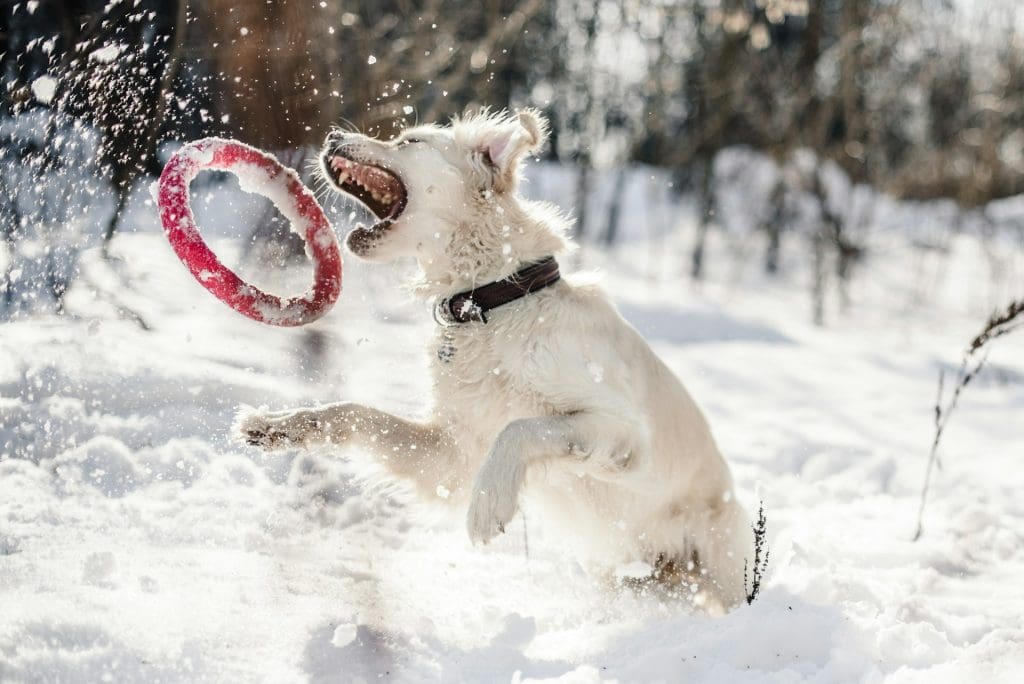
We all love our dogs and want to give them toys they enjoy chewing on. Many of us even have dogs that would destroy our homes if they did not have a toy to keep them busy chewing. The challenge is finding something that is safe for our canine friends to chew, as hard chew toys for dogs can pose serious risks. If a toy is too hard, tooth fractures can result.
How Hard Chew Toys for Dogs Cause Tooth Fractures
In dogs, the upper fourth premolar teeth and the lower first molar teeth (known as carnassial teeth) cross over each other with the fourth premolars on the outside (buccal side) to create a shearing force that is used for slicing food. When a dog chews on a toy, this anatomy causes force toward the cheek on the upper fourth premolar and toward the tongue on the lower first molar.
If the toy is hard enough, the tooth will fracture before the toy, creating a slab fracture of one or both teeth that can lead to exposure of the pulp chamber, followed by pain, infection, and death of the tooth. Once the fractured tooth has died, a process of infection and destruction of tissue starts working its way out of the root tip of the tooth, eventually leading to a tooth root abscess.
How to Tell If a Dog Toy Is Too Hard
Since no one wants their dog to suffer a fractured tooth and the ongoing pain and infection that result, we wanted to share a good rule for determining if a dog toy is too hard. The best way to tell if a toy is too hard is to press your fingernail into the toy. If your fingernail makes a dent, the toy is flexible enough to be safe to chew.
If, on the other hand, there is no dent made by a fingernail and you can feel your fingernail bend, the toy is too hard and is likely to lead to a fractured tooth. Toys like antlers, cow hooves, and natural animal bones that are available in many pet supply stores are some of the most common causes of fractured carnassial teeth. Better choices for strong chewers include tough rubber toys that allow for some give but are more difficult to destroy quickly.
Treatment Options for Dogs With Fractured Teeth
If a dog does fracture a tooth chewing on a hard toy, there are three primary treatment options available, depending on the severity of the fracture, timing of diagnosis, and long-term goals for comfort and function:
- Extraction
Extraction is the least expensive option and removes the source of pain and infection. However, it also removes a large functional tooth and may allow the opposing tooth to cause trauma to the gums in the extraction area. - Vital pulp therapy with restoration
This option is only possible if the fracture is treated within 24 hours of the initial break. Because dogs often hide pain and owners may not notice dental injuries right away, this treatment window is frequently missed. - Root canal (endodontic) therapy with full metal crown
This is the most costly option, but it preserves the function of the tooth. After treatment, periodic dental radiographs are required to ensure the tooth root and surrounding bone remain healthy and intact.
Why Preventing Tooth Fractures Is Better Than Treating Them
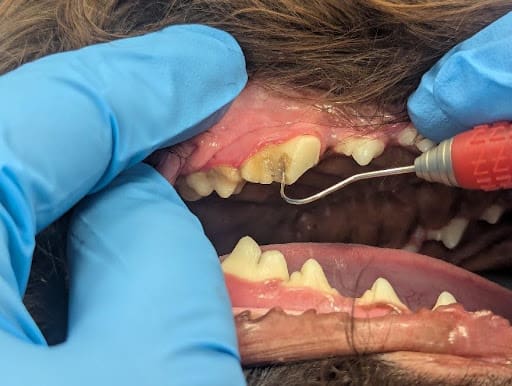
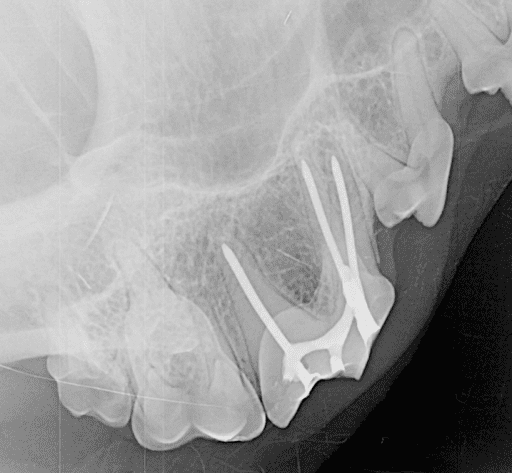
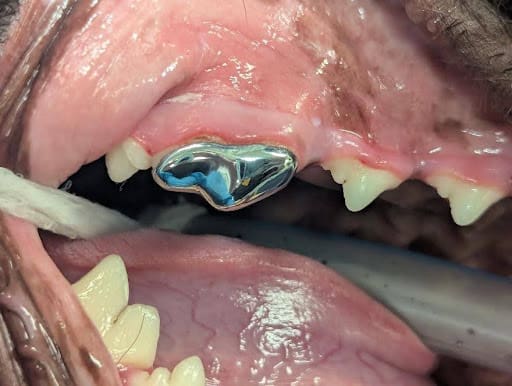
The following pictures show the type of slab fracture that can result from chewing on an unsafe hard toy, as well as the crown placed (after endodontic therapy) to protect the structure of the tooth. While a metal crown may seem to be stronger than the original tooth, it is only as strong as the tooth structure underneath.
Once a tooth is dead (non-vital), it is never quite as strong as it was when it contained living tissue. The metal crown does help to protect the remaining tooth (and is essential to do so), but the ideal situation would be to prevent the fracture in the first place.
Now that you know the risks of hard chew toys, we hope you collect them and replace them with safer toys for your dog to chew. If they knew the pain you were saving them from, they would thank you!
Protect Your Dog’s Dental Health Before Problems Start
Choosing the right chew toys plays an important role in protecting your dog’s dental health. While chewing is a natural and necessary behavior, hard chew toys for dogs can lead to painful tooth fractures, infections, and costly dental treatments that are often preventable. By selecting safer, flexible chew options and monitoring your dog’s chewing habits, you can significantly reduce the risk of dental injury.
If you have concerns about your dog’s teeth, notice signs of discomfort, or are unsure which chew toys are safe, we are here to help. Contact us today to schedule a dental evaluation or to speak with our team about protecting your dog’s oral health before problems develop.
Images used under creative commons license – commercial use (01/02/2026) Photo by Anastasia Ulyanova on Unsplash