

Dental radiographs have been the mainstay for quality pet dental care for over twenty years. They were the best way we had to view oral disease occurring below the gumline (gingival margin). In recent years, Cone Beam CT for veterinary dentistry (CBCT) has worked its way into Veterinary Dental Specialty practices around the country. But what are the benefits of CBCT over traditional dental radiographs?
Traditional Dental Radiographs: Benefits and Limitations
Dental radiographs are able to visualize a two dimensional picture of disease of the bone and periodontal ligament below the gingival margin. They allow veterinarians to see some bone loss related to periodontal disease, endodontic disease, dentigerous cysts, and oral cancers. They also allow visualization of loss of the important periodontal ligament space around the teeth as well as loss of tooth structure in cases of tooth resorption.
In many patients, this two dimensional view is sufficient. In some patients, however, the nature of the disease or anatomy of the patient prevents the two dimensional view from revealing the extent of the disease or even the existence of the disease.
Cone Beam CT vs Dental Radiographs: What’s the Difference?
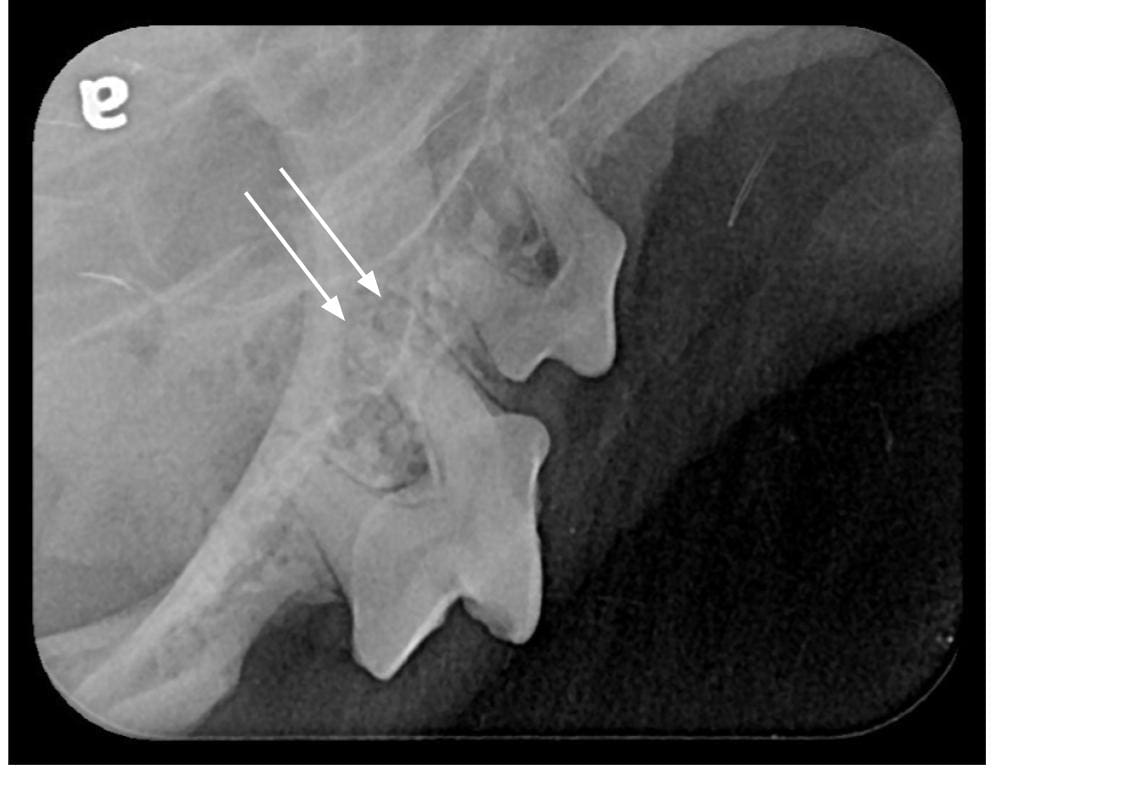
The pictures below are of a traditional dental radiograph and a CBCT of the same dog. In the dental radiograph it is difficult to visualize any disease. The upper fourth premolar in the radiograph has two roots that overlap each other that make the disease around the palatal root difficult to see.
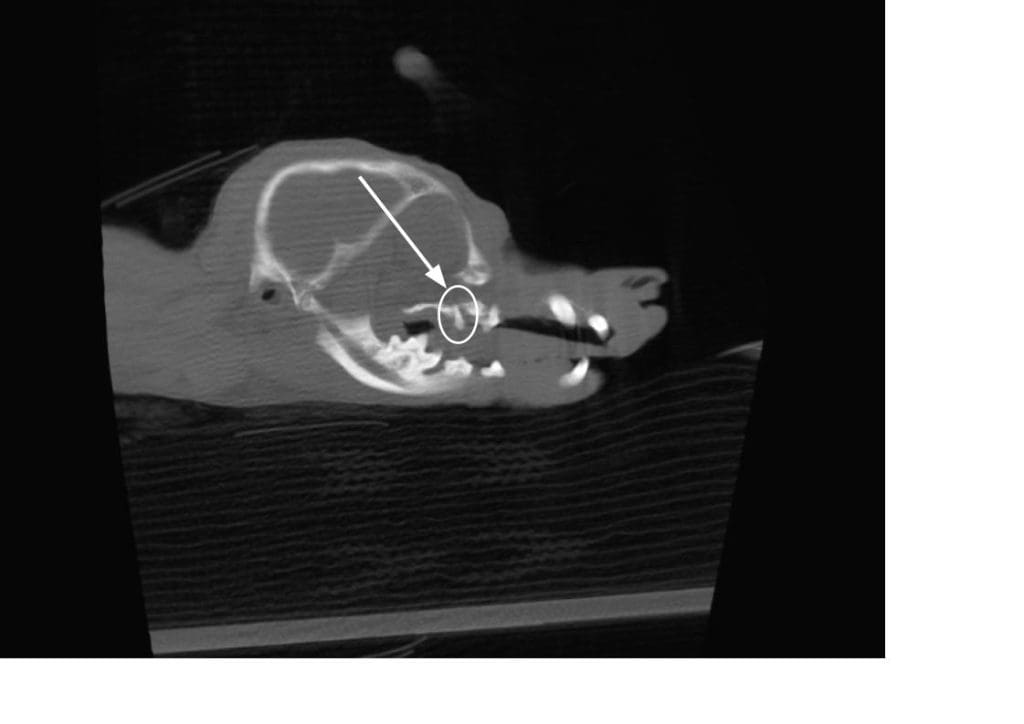
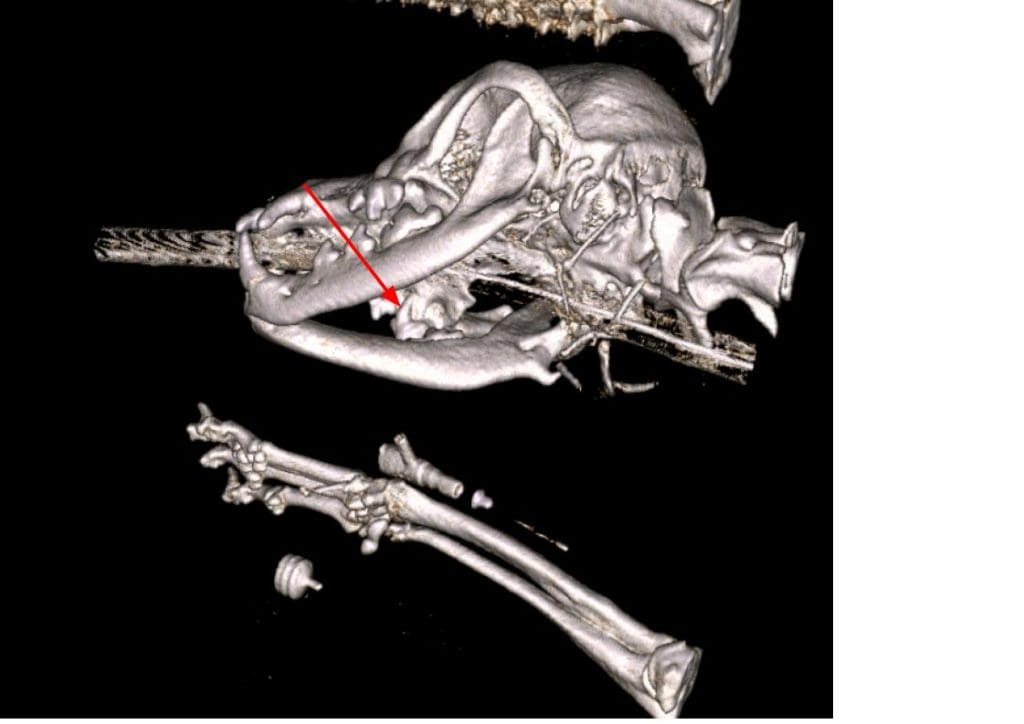
In the CBCT, the extreme bone loss around that root is easily visualized, both on the two dimensional and three dimensional images. In the two dimensional CBCT image, the root appears to be floating loose apart from any bony structures. In the three dimensional CBCT image you can see the root bulging out from the surface of the bone that surrounds the remainder of the tooth roots.
On the surface of the gums (gingiva) there was no indication of disease. Missing this disease and not removing the affected tooth would lead to ongoing pain and infection for the dog and eventually an additional anesthetic episode and additional cost to treat the disease.
CBCT in Veterinary Oncology: Detecting Oral Cancer More Accurately
Cone Beam CT also allows a Veterinary Dental Specialist to visualize the extent of an oral cancer. Treatment planning would be very different for a mass with a small area of bone invasion versus an extensive area of bone invasion. It is important when dealing with oral cancers to know the extent of invasion so informed decisions can be made by both the owner and the veterinarians involved in the treatment choices.
It is possible for only a small area of a mass to be visible and the remainder be invading the bone over a large area of the skull. Knowing if a mass is potentially surgically resectable versus inoperable is essential in deciding how aggressive to be with surgery and treatment going forward.
Cone Beam CT vs Traditional CT Scan: Better Detail, Lower Radiation
Cone Beam CT can also be compared to a traditional CT for imaging of the oral and nasal cavity. The benefit of CBCT over traditional CT is the amount of detail available. A traditional CT is able to image sections of the head about 1-10 mm apart.
Due to the smaller area of imaging, and the A CBCT has the ability to image sections that are only 0.1 to 0.4 mm apart, depending on the machine. This allows immensely more detail in imaging and allows the tightly packed structures of the oral cavity to be imaged more thoroughly.
This level of detail dramatically decreases the chance of disease being missed on imaging. CBCT is also more rapid and requires less radiation that other more traditional imaging methods.
Why Veterinary Dental Specialists Recommend CBCT Imaging
With all these benefits of Cone Beam CT for veterinary dentistry, this technology has become a groundbreaking advance in diagnosing disease, planning treatment, and ensuring better long-term outcomes for pets. CBCT can reveal conditions that traditional radiographs may miss, helping veterinarians provide more accurate care, reduce additional procedures, and improve quality of life for our patients.
If you have questions about how CBCT could benefit your pet, we would love to help you understand your options. Contact us at 636-695-9955 or reach out to your local Veterinary Dental Specialist® to learn more and schedule a consultation.
Images used under creative commons license – commercial use (11/26/2025) Photo by Micah Giszack on Unsplash