
Cats can be especially resistant to any form of medicating. This is usually for one or more of a few reasons. Cats tend to be very independent creatures and like to make their own choices about what they do and when. Cats also often have little tolerance for handling unless it is their idea. They have a short time of tolerance before they become annoyed and work to escape.
In addition, a cat’s sense of taste is very different than that of a dog or human. Cats cannot taste sweet things, so most flavorings used for dogs and humans are ineffective in cats. Cats have a very developed sense of bitter taste, and many medications are not flavored in a way that a cat would enjoy taking them. With all that information, here are some things you can try to give your cat medicine.
Route of Administration
With some medications, there are different options for how the treatment can be given to your cat. Many medications are given orally, but in some cases options are available for injectable, transdermal (absorbed through the skin), or inhaled administration. Some of the injections or transdermals may also be available in forms that have to be dosed less frequently. These options may be easier for some cats. Since that is not an option for all medications, the next choice is to change the form in which we offer an oral medication.
Dosage Form
Depending on the medication, there are sometimes smaller tablets, liquids, or chewable forms that are available commercially or can be compounded to make the process a bit easier. While compounded medications often come with a higher price than what is available through traditional manufacturers, the cost can be worth the increased convenience. Your veterinarian can advise you on the options and costs and help by finding a reputable and trustworthy compounding pharmacy familiar with creating dosing forms more likely to be palatable to cats.
Ways to Dose a Cat With Medication
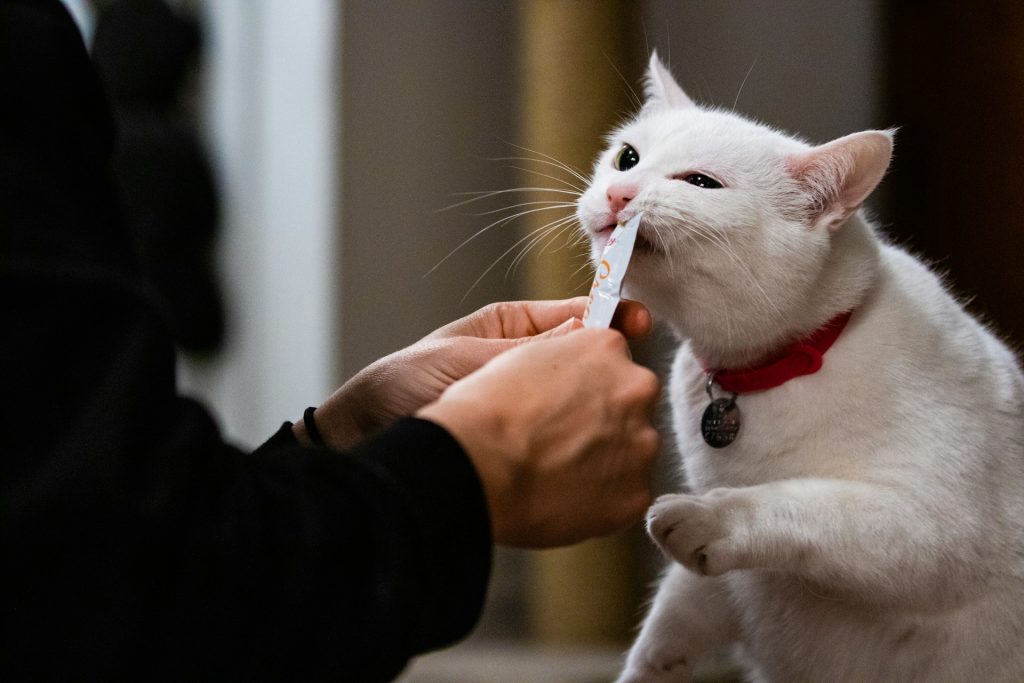
If your cat is food motivated, you have a great advantage. There are some squeeze-up treats (e.g., Churu) that many cats love and can help with giving medications. With smaller pills or parts of pills, you can often set the pill on a surface and place a dollop of the squeeze-up treat on top. Many cats will be so eager to eat the treat that they will eat the pill as well. This technique can also be used with canned food, pill pocket type treats, or things like peanut butter or squeeze cheese. If your cat is not food motivated, you will need to hold your cat still and administer the medication with a syringe, hand, or pet piller depending on the form of medication you are giving.
Restraint and Medication Administration
If all the above options are not available or have been exhausted with no solution that works, there are times we need to resort to restraint to medicate a cat. It is important with cat restraint that we respect their need to be handled as gently as possible and also their ability to cause damage with their teeth and claws. Ideally, a cat’s claws should be trimmed to minimize the damage they can do by scratching.
With or without a nail trim, it is important to keep the cat’s feet under control. An often effective way to keep a cat’s paws restrained is to use a large towel and wrap the cat up with a technique veterinary staff call a “kitty burrito” or “purrito”. The most important thing is that you contain the cat’s paws and have control of its head with the towel wrapped around the neck in a way that does not choke your cat. This is a technique that takes practice but is very effective, especially when you do not have help to hold the cat. There are also some wonderful self-adhesive wraps available online that work great for making a purrito. In some cases it might be necessary to use an additional small towel rolled up and wrapped under your cat’s neck so you can hold the ends behind the head and have more control of where the cat’s head is.
Once your cat is restrained, you will have an easier time giving the medication. If the medication is a liquid, do your best to lift the cat’s head gently and carefully push the syringe in through the side of the mouth. Lifting your cat’s head causes its mouth to open slightly, allowing easier access from the side. If the medication is in pill form, gently lift the cat’s head and use your finger (if you trust your cat not to bite) to place the pill in the back of the mouth and give it a gentle push over the base of your cat’s tongue. If your cat is growling or you think the cat is likely to bite, you can purchase a device called a pet piller. This device has a soft rubber tip that can hold a pill with a plunger that can push the pill out of the tip.
Getting Help
It helps to have an extra person to help with restraining your cat so you can focus on making sure the medication is taken properly. If all else fails, contact your veterinarian and see if there is anyone who might be able to help you give your cat medicine or if you might bring your cat in for administering medication. There will likely be a charge for doing this as it takes time away from a staff member’s other duties.
Be aware that veterinary staff does not want to be injured any more than you do. If your cat is extremely aggressive, this will not be a good option and medication choices may need to be adjusted by your veterinarian. If you are not able to medicate your cat and you have tried all the tricks, do not feel guilty. Some pets are much more difficult to treat than others. We tell owners to do the best they can without injuring themselves or their cat.
Questions About Your Cat’s Medication?
Whether your cat needs a different medication form or you’re having difficulty giving your cat medicine at home, our team is here to help. We can recommend treatment options, demonstrate medication techniques, and answer your questions so your cat gets the care they need. Contact us today to schedule an appointment and let us help make treating your cat a little less stressful.
Photo by Francis Painchaud on Unsplash used with permission under the Creative Commons license for commercial use 08/04/2026